Using Mechanical Engineering to Optimize Battery Life
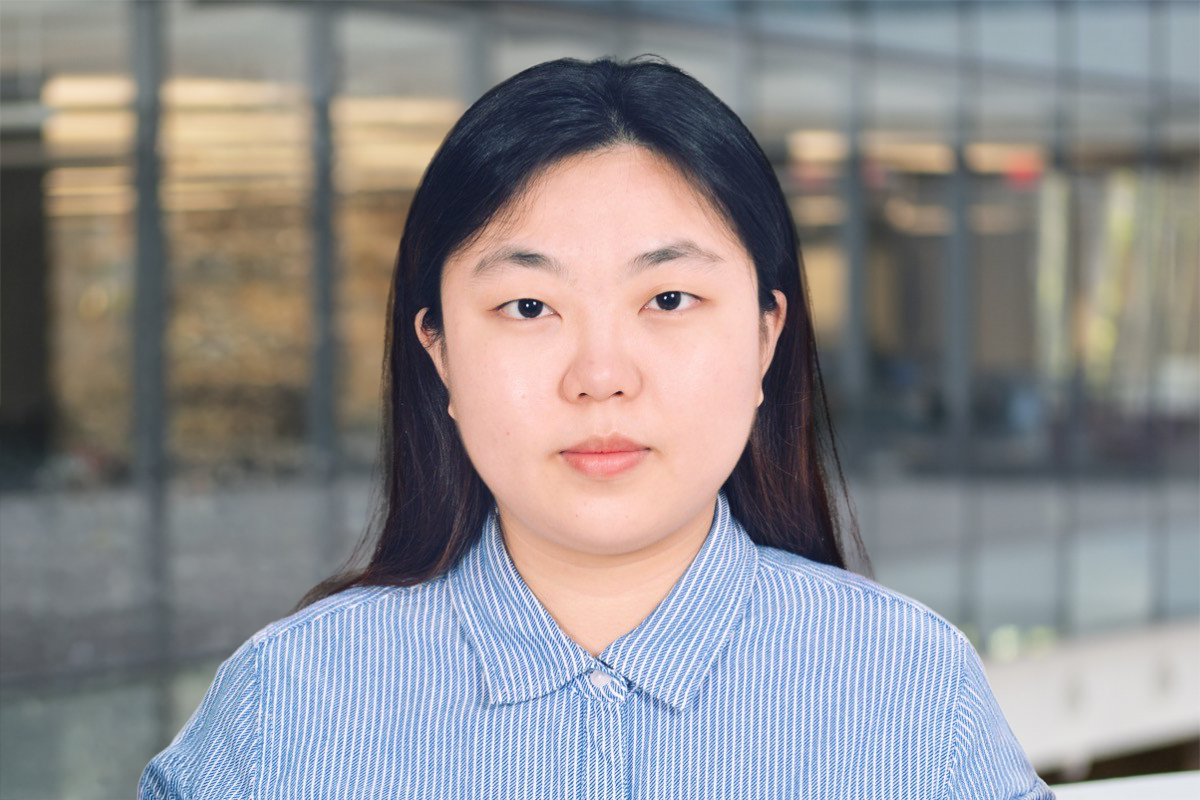
Junning Jiao, PhD’27 (expected), mechanical engineering, has completed an internship at Tesla, leads a successful two-year project with LG Energy Solution, and is a graduate researcher at the Center for Battery Sustainability of Northeastern and MIT. After she graduates, she hopes to turn her research into a start-up and lead her own company. Courtesy photo.
Junning Jiao is in the fourth year of her mechanical engineering PhD at Northeastern University. Before arriving at Northeastern, she earned a bachelor’s degree in engineering mechanics at Dalian University of Technology and a master’s in mechanical engineering at the National University of Singapore. Since her undergraduate work was mainly theoretical, she wanted her master’s to use engineering in a practical way. That desire led her to join a government-supported project in Singapore, where she developed a material to help decrease noise pollution in areas with heavy car traffic. Along the way she came to enjoy the research environment, and found a growing curiosity that pushed her to pursue a PhD.
Going into her search, Jiao wanted to find a lab that explored new topics while still drawing on her foundation in mechanical engineering. Boston was appealing for a variety of reasons, including a similar climate to her hometown and the advantages of having so many educational institutions and a vibrant environment for technological innovation in one place. Upon further research she found the Center for Battery Sustainability at Northeastern, founded in collaboration with Assistant Professor Juner Zhu and two MIT professors. Battery research caught her attention right away: it’s a topic with real impact on society, and one where her mechanical background could make a difference. This topic also allowed her to explore new subjects, like electrochemistry, another goal of pursuing a doctorate degree.
Research and projects

Jiao presenting at an ASME event. Courtesy photo.
At the Center for Battery Sustainability, Jiao studies a less-explored side of how batteries “breathe”, swell, and break down over time. Most research in this domain focuses on the electrochemical reactions, such as how the heat they generate shortens the battery’s life. However, there is a mechanical response as well—a battery actually changes shape, swelling and shrinking slightly, every time it charges and discharges. Jiao studies this physical response alongside the electrochemical one, to give a fuller picture of a battery’s overall health. Based on this work she created what she calls a “coupling model” that combines all this information which can help analyze the health and performance of a battery, as well as predict any failures before they happen.
Jiao is especially grateful to Northeastern for its steady support. The department actively encouraged her to take cross-discipline courses, allowing her to explore new topics and build skills in areas like coding and optimization. It is also important for a PhD student to participate in conferences to develop their presentation skills and observe what fellow researchers are doing, in order to trade information and collaborate. Northeastern’s travel fund has been a big help here, giving Jiao the freedom to stay connected with her scientific community such as the Electrochemical Society, by which her research has been well received.

Jiao at an Electrochemical Society event. Courtesy photo.
Currently, Jiao is applying her research to a project with LG Energy Solution, a major battery manufacturer. As batteries are their main product, they want a complete understanding of how long their batteries last and how to extend that life as far as possible—a goal that lines up almost perfectly with Jiao’s research. Starting this endeavor two year ago, the company has since advanced this project into its second phase, with Jiao serving in a leadership position. She’s found the industry experience invaluable, both in terms of pace and perspective. Industry tends to move much faster than academic research, with clear deliverables and deadlines that the company pushes her to meet. Their priorities are different as well, more focused on short-term interests, with direct feedback aimed at making her work better for customers. Stepping into a leadership role has also shown Jiao a broader view of how a project should be organized and the administrative tasks that come with industry. She is very grateful for the experience, as it has informed her future career goals and given her the skills to achieve them.
Internship at Tesla
As an engineering intern, half of her time at Tesla was spent using computer simulations to study battery performance and safety in the event of vehicle abuse, like an accident. She studied how the battery would respond if it were crushed and exposed, a major concern for vehicle manufacturers. Jiao also created models to simulate “thermal runaway propagation”—a chain reaction in which one overheating cell triggers the same failure in the cells next to it—in order to enhance Tesla’s safety protocols. Both of these projects relied on cross-team collaboration in order to effectively communicate her findings to the design and testing groups. Until then, Jiao mostly focused on single battery cells, but this role has given her the knowledge of how industry assembles the battery modules on a vehicle level, broadening her knowledge of larger battery systems.
She also gained a mentor at Tesla, who taught her a very important lesson. In college, Jiao was shy, often sticking to smaller circles and hesitant to reach out. At first she did the same at Tesla, but her advisor urged the opposite, pushing her to talk to anyone and everyone. Communication, he explained, is key in a project’s progress, keeping everyone on the same page and pushing forward. It’s also needed in order to grow in industry, to get as much feedback as possible. This advice also improved her self-advocacy skills, giving her an outlet for her own feedback.
Advice and future plans

Jiao presents at a Battery Sustainability Workshop. Courtesy photo.
As a fourth year, one piece of advice she has for other students is to not be afraid to try new things. Staying open-minded and saying yes to new opportunities, she says, led to real growth and a wider skillset. Many times she had to tackle something she’d never seen before and didn’t get it right on the first try—but her persistence always paid off in the end. Jiao extends this belief to the PhD itself, a challenging pursuit for any student. The challenge is very important, she explains, because it builds her self-confidence and problem-solving skills. She now can approach any problem with a plan and the assurance that she will find a solution.
After she completes her PhD, Jiao is hoping to turn her research into a start-up. Her goal is to combine the hardware and software elements—the hardware gathering the data she needs, the software using it to fine-tune how an energy system runs—giving her a feedback loop on a battery’s condition. Optimizing a battery’s lifetime is especially important in an era of rapid AI growth that demands enormous amounts of energy. She still has a long way to go before there’s a product, but she hopes her work will eventually reach every company, lab, and household—becoming a quiet backbone in any experiment or product that runs on a battery for lifetime extension, sustainability, and safety.